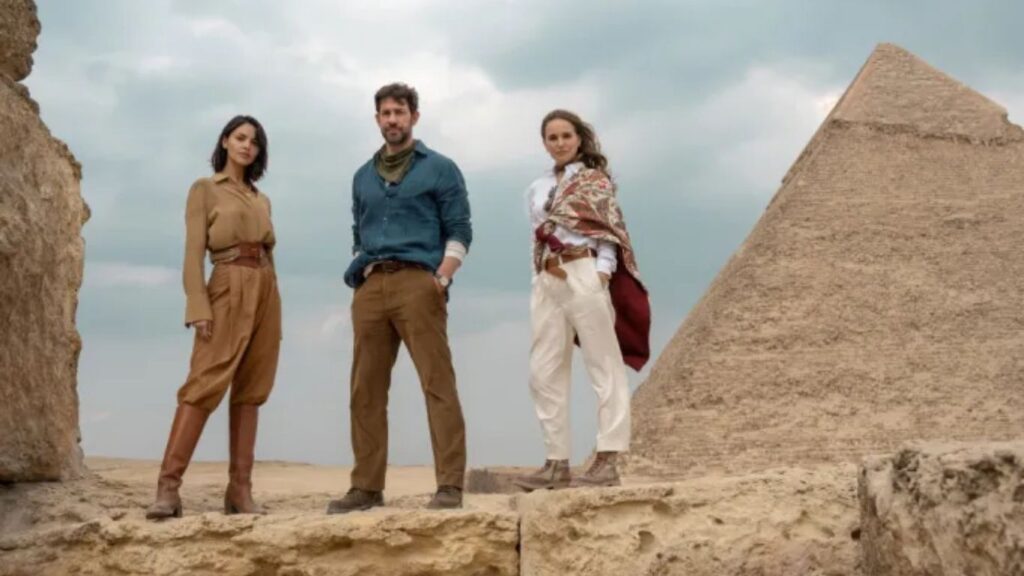
Guy Ritchie’s Fountain of Youth (2025) arrived with tremendous anticipation, promising a cinematic blend of mystery, adventure, and spectacle. With John Krasinski and Natalie Portman leading the cast, the film had all the right ingredients for a blockbuster — a charismatic duo, high-stakes treasure hunting, and the timeless allure of eternal youth. Yet, when it hit theaters and streaming platforms, audiences and critics found themselves divided.
This detailed review article takes an in-depth look at Fountain of Youth — analyzing its critical and audience reception, narrative strengths and weaknesses, performances, direction, cinematography, and overall place in Ritchie’s evolving filmography. We’ll explore why some viewers found it a stylish adventure worth watching, while others dismissed it as yet another “Indiana Jones clone.”
The Premise and Expectations
The Story at a Glance
Fountain of Youth follows archaeologist-turned-adventurer Jack Harper (John Krasinski) and historian-linguist Dr. Elise Rowe (Natalie Portman) as they embark on a perilous journey across continents in search of the mythical source of eternal life. Their quest leads them from ancient Spanish cathedrals to Amazonian ruins, tangled in a web of rival treasure hunters, secret societies, and personal redemption arcs.
The film’s concept — the eternal human obsession with youth — offered rich philosophical and emotional potential. Many expected Guy Ritchie to bring his trademark blend of snappy dialogue, quick editing, and stylish action to this ambitious premise.
The Pre-Release Buzz
Before release, the marketing emphasized globe-trotting spectacle and witty banter between Krasinski and Portman. Early trailers hinted at an adventure mixing historical intrigue with contemporary flair, setting fan expectations somewhere between National Treasure and Sherlock Holmes. Critics anticipated a return to Ritchie’s energetic, fast-cut direction after his experiments with different genres.
Critical Reception: A Divided Verdict
Mixed to Negative Reviews
Upon release, Fountain of Youth received mixed to negative reviews from critics. While many praised its visual polish and brisk pacing, others criticized its formulaic plot and lack of originality. The overall critical consensus was that it looked impressive but felt emotionally hollow.
The average critic score hovered around 40–45 out of 100, reflecting a divide between those who found it entertaining and those who felt it was a missed opportunity. The film struggled to find its tonal balance — trying to be both a grand adventure and a self-aware modern blockbuster.
Common Praises
Despite criticisms, Fountain of Youth wasn’t without its merits. Critics highlighted a few consistent positives:
- Visual Brilliance: The cinematography and location choices were often breathtaking, capturing exotic ruins, dense forests, and historical cities with precision.
- Production Design: Attention to detail in set pieces, costumes, and props added authenticity and scale.
- Action Sequences: Guy Ritchie’s dynamic camera movements and editing gave certain chase and fight scenes kinetic energy reminiscent of his earlier works.
- Chemistry Between Leads: Krasinski and Portman’s on-screen partnership carried charm, even when the script faltered.
Common Criticisms
However, the praise was tempered by recurring complaints:
- Predictable Plot: Many reviewers found the story unoriginal, borrowing too heavily from earlier adventure classics.
- Flat Character Arcs: Both lead characters lacked emotional depth, making it hard to connect with their motivations.
- Uneven Tone: The film alternated between humor and seriousness without cohesion, making some scenes feel disjointed.
- Excessive Exposition: Instead of showing, the film often told — relying heavily on dialogue to explain lore and puzzles.
Audience Reception: Streaming Success and Viewer Opinions
Casual Viewers vs. Critics
Interestingly, audience reactions were more forgiving than critics. Many viewers found Fountain of Youth a “fun watch” — especially for those who enjoy light adventure films. While serious film enthusiasts criticized its depth, casual streaming audiences appreciated its entertainment value.
On streaming platforms, the film performed strongly during its first two weeks, ranking among the top-viewed titles. Social media buzz suggested that audiences were drawn by its escapism, chemistry between leads, and globe-spanning thrills.
Positive Audience Comments
Many fans praised the film for being “pure entertainment,” with some noting:
- It reminded them of old-school adventure movies.
- The visual effects and exotic settings offered cinematic escapism.
- The pacing made it an easy watch for families and weekend viewers.
Negative Audience Comments
However, other viewers echoed critic concerns:
- The film “feels like déjà vu.”
- The ending lacked emotional payoff.
- The dialogue was sometimes awkward or clichéd.
- The final act felt rushed and overly dependent on visual spectacle rather than storytelling.
In essence, Fountain of Youth found its audience not through depth or innovation but through sheer watchability.
Performances and Cast Analysis
John Krasinski as Jack Harper
Krasinski brings his trademark charisma to the lead role, playing a rugged yet likable adventurer. However, critics noted that the script didn’t give him enough range to display emotional nuance. While he handled the physical demands and humor effectively, his performance sometimes felt restrained by the film’s formulaic writing.
Natalie Portman as Dr. Elise Rowe
Portman’s role as the intelligent and determined historian adds sophistication to the story. She elevates several scenes with her gravitas, grounding the film’s fantastical premise. Yet, the chemistry between her and Krasinski, though pleasant, lacked the spark needed to make their partnership truly memorable.
Supporting Cast
The supporting cast included a mix of international actors and familiar faces, though most were underutilized. The villains, in particular, came across as one-dimensional, offering little to distinguish them from typical treasure-hunt antagonists.
Direction and Cinematic Style
Guy Ritchie’s Signature Touches
Guy Ritchie is known for his energetic direction, stylized visuals, and fast-paced storytelling. Fountain of Youth carries some of those hallmarks — slick transitions, witty exchanges, and a sense of momentum. Yet, the film occasionally feels like Ritchie holding back, perhaps constrained by studio expectations.
Unlike his earlier works such as Snatch or Sherlock Holmes, this film feels safer — prioritizing accessibility over boldness. The editing remains sharp, but the signature narrative playfulness that defined Ritchie’s best films seems diluted.
Cinematography and Visuals
Visually, Fountain of Youth shines. Sweeping drone shots, natural lighting, and practical effects combine beautifully. Each location — from desert ruins to underwater temples — feels tangible and immersive. The color palette leans toward golden hues and earthy tones, reinforcing the mythical theme of rejuvenation and time.
Music and Sound Design
The score, while atmospheric, sometimes overplays emotion. Action scenes are accompanied by grand orchestration, adding scale but occasionally overshadowing subtle moments. Still, the music succeeds in giving the film an epic rhythm.
Writing and Narrative Structure
Plot Construction
The film follows a conventional three-act structure, with a clear setup, conflict, and resolution. It opens with intrigue but soon falls into predictable patterns: artifact retrieval, chase sequences, betrayal, and the inevitable discovery. While competently structured, it rarely surprises the audience.
Themes and Symbolism
At its core, Fountain of Youth explores humanity’s eternal desire to conquer time. It touches upon greed, mortality, and the price of obsession — themes that could have been profound. Unfortunately, the film often skims over them in favor of spectacle.
Script Weaknesses
The dialogue, though occasionally witty, often feels forced. Some emotional moments come across as rushed or unearned, diminishing the impact of key revelations. This uneven writing contributes to the film’s lack of emotional resonance.
Overall Strengths and Weaknesses
Strengths
- Beautiful cinematography and production design
- Engaging lead performances
- Fast pacing and accessible entertainment value
- Strong visual effects and well-crafted set pieces
Weaknesses
- Predictable and derivative story
- Shallow emotional depth
- Uneven pacing and tone
- Weak villain and underdeveloped side characters
Streaming Performance and Cultural Impact
After its theatrical release, Fountain of Youth found a second life on streaming platforms, where audiences seeking light adventure gravitated toward it. It performed particularly well among younger demographics and fans of escapist cinema.
However, despite its streaming success, it failed to generate the kind of lasting cultural footprint that defines true classics. Its reception reflects the current landscape of modern blockbusters — visually impressive but narratively thin.
Is Fountain of Youth Worth Watching?
Whether Fountain of Youth is worth your time depends largely on expectations. If you’re looking for a thought-provoking story or emotional drama, you might walk away underwhelmed. But if you want a visually stunning, easy-to-watch adventure filled with action, charm, and exotic locales, it delivers exactly that.
In short, it’s not a masterpiece, but it’s not a failure either — just a competent, entertaining adventure film that plays it safe.
Conclusion
Fountain of Youth stands as an intriguing case study in modern blockbuster filmmaking. It proves that even with strong actors and stylish direction, a film can falter without a compelling story or emotional heart. Guy Ritchie’s craftsmanship ensures the movie is never dull, yet it rarely rises above mediocrity.
The film’s mixed reviews underscore a larger trend — audiences crave both spectacle and soul, and when one outweighs the other, even the grandest adventure can feel hollow. Still, for casual viewers, Fountain of Youth offers enough thrills, humor, and visual splendor to justify a watch.
Frequently Asked Questions (FAQs) about Fountain of Youth Reviews
Why did critics give Fountain of Youth mixed reviews?
Most critics praised its visuals and action but criticized its predictable plot, uneven tone, and lack of emotional depth. It’s seen as entertaining but unoriginal.
Is Fountain of Youth based on a true story or legend?
The film draws inspiration from the myth of the Fountain of Youth — a legendary spring believed to restore youth — but the story itself is entirely fictional.
How did audiences react to the film compared to critics?
Audiences were generally more forgiving, finding it fun and visually appealing, even if it lacked depth. It performed better on streaming than in theaters.
What are the best parts of the movie according to fans?
Fans appreciated the action sequences, the chemistry between John Krasinski and Natalie Portman, and the adventurous tone reminiscent of classic treasure-hunt films.
Is Fountain of Youth worth watching in 2025?
Yes, if you enjoy light adventure films with beautiful visuals and easy pacing. It’s not groundbreaking, but it’s a decent, entertaining watch for casual viewers.