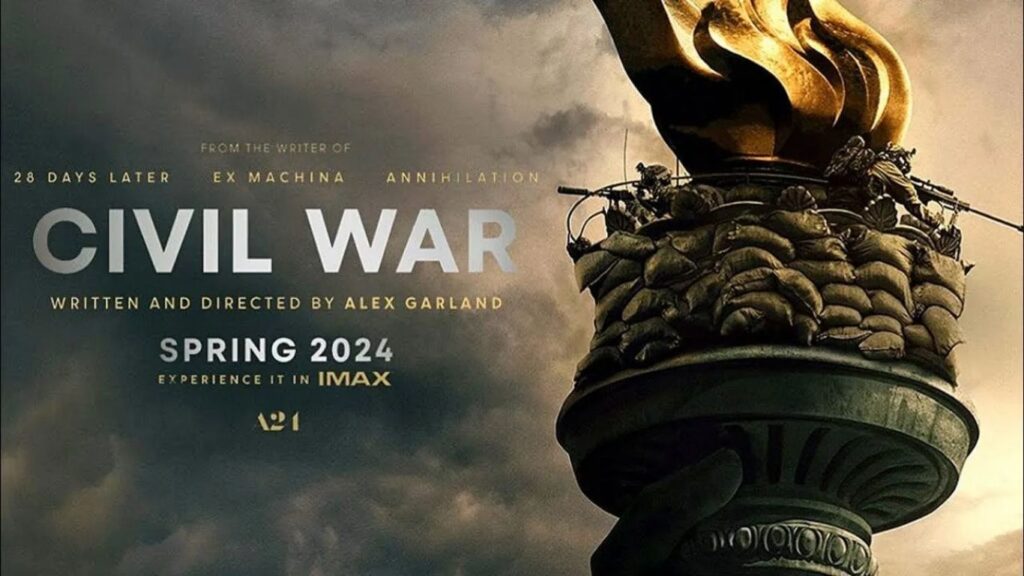
“Civil War” (2024), directed by Alex Garland, has emerged as one of the most talked-about films of the year — not just for its visceral portrayal of a divided America, but for the conversation it has sparked around media, politics, and human survival in times of chaos. Starring Kirsten Dunst, Wagner Moura, Cailee Spaeny, and Nick Offerman, the movie places viewers in a dystopian near-future where journalists document the downfall of their nation, traveling through a collapsing United States torn apart by internal warfare.
Upon its release, Civil War divided audiences and critics alike. While some hailed it as a masterpiece of visual storytelling and political allegory, others felt it lacked emotional depth and narrative clarity. In this comprehensive review analysis, we’ll explore the critical reception, themes, performances, visuals, and audience reactions to Garland’s ambitious war drama — offering a complete look at how Civil War (2024) resonated across the cinematic landscape.
Overview of Civil War (2024)
Plot Summary
Set in a not-so-distant future, Civil War 2024 Film Reviews follows a team of journalists — Lee (Kirsten Dunst), her partner Joel (Wagner Moura), young photographer Jessie (Cailee Spaeny), and veteran reporter Sammy (Stephen McKinley Henderson). They embark on a perilous road trip from New York to Washington, D.C., through a fractured America engulfed in civil conflict.
As they navigate bombed-out cities, violent militias, and shifting alliances, their mission is simple yet dangerous: reach the White House and interview the President before rebel forces overthrow him. The story unfolds through the journalists’ lenses — both literally and metaphorically — capturing the raw, unfiltered chaos of a nation turned battlefield.
Critical Reception and Ratings
Rotten Tomatoes and Metacritic Scores
Critics largely praised the film, though opinions were mixed. On Rotten Tomatoes, Civil War scored around 81%, signaling strong approval for its direction, performances, and immersive storytelling. On Metacritic, it achieved a 75/100, described as “generally favorable reviews,” reflecting admiration for its artistry but criticism of its narrative choices.
Audience ratings were more divided. Many viewers appreciated its realism and suspense, while others found the lack of political context frustrating.
Overall Consensus
Most critics agreed that Civil War is an audiovisual triumph — blending gritty realism with haunting beauty. However, the film’s decision to avoid explaining why the war started became a double-edged sword. Some found the ambiguity compelling and realistic, while others felt it made the movie emotionally distant.
Thematic Depth and Symbolism
The Meaning Behind the War
One of the most striking aspects of Civil War is its refusal to take sides or define the cause of the conflict. Garland intentionally avoids political specificity, instead focusing on the human cost of division and violence. The film mirrors modern anxieties — misinformation, polarization, and institutional collapse — without naming culprits or ideologies.
This choice makes Civil War a universal parable rather than a partisan statement. It’s not about “who’s right,” but about what happens when communication fails and fear replaces empathy.
Journalism as the Central Theme
At its heart, Civil War is a film about journalism under fire. The protagonists aren’t soldiers but observers, documenting truth in a world where truth itself is endangered. Their journey raises questions: What is the role of a journalist in times of national collapse? Should they remain detached, or do they have a moral responsibility to intervene?
Lee (Kirsten Dunst) represents seasoned detachment — capturing horror without reacting. Jessie (Cailee Spaeny), the young newcomer, embodies innocence and the evolution of empathy. Together, they illustrate the cost of witnessing violence and the loss of humanity that comes with professional objectivity.
A Reflection on America’s Identity
Garland’s America is eerily familiar — skyscrapers crumbling, militias patrolling suburbs, flags tattered but still waving. The imagery speaks to the fragility of unity and the myth of national invincibility. The film never specifies red vs. blue, but it evokes the emotional truth of a society tearing itself apart — politically, culturally, and morally.
Performances That Carry the Film
Kirsten Dunst as Lee
Kirsten Dunst delivers one of her most restrained and powerful performances. As a photojournalist hardened by trauma, Lee’s calm demeanor conceals deep fatigue and moral conflict. Critics praised Dunst’s ability to convey exhaustion and courage through minimal dialogue — her eyes often telling more than her words.
Cailee Spaeny as Jessie
Cailee Spaeny, fresh from her acclaimed performance in Priscilla, brings innocence and curiosity to the film. Jessie’s transformation from naive observer to hardened documentarian mirrors the audience’s journey. Her dynamic with Dunst provides emotional grounding amid chaos.
Wagner Moura and Stephen McKinley Henderson
Wagner Moura adds intensity and occasional humor, balancing the film’s grim tone. Henderson’s character, Sammy, serves as the moral compass — his calm wisdom anchoring the group in moments of despair.
Collectively, the cast’s chemistry enhances the sense of realism. Each performance feels authentic, emphasizing that in war, survival depends as much on empathy as it does on endurance.
Direction and Cinematography
Alex Garland’s Vision
Alex Garland, known for Ex Machina and Annihilation, brings his trademark blend of realism and surrealism to Civil War. The film’s pacing, structure, and visual grammar evoke documentary filmmaking — handheld shots, natural lighting, and moments of silence that heighten tension.
Garland’s direction avoids spectacle for spectacle’s sake. Explosions and gunfire are brief but impactful, serving the story rather than dominating it. The restraint makes the violence more haunting because it feels plausible — as if the events could unfold tomorrow.
The Visual Language
Cinematographer Rob Hardy crafts stunning, harrowing imagery. From the burning ruins of Manhattan to eerie roadside encounters, the film’s visuals strike a balance between beauty and horror. Each frame looks like a photojournalist’s shot, reinforcing the theme of observation over intervention.
Sound Design and Score
The soundscape deserves equal praise. Gunfire echoes with bone-rattling realism, and the silence that follows is just as impactful. Composer Geoff Barrow’s minimalist score amplifies tension, underscoring the fragility of peace and the constant hum of dread.
Strengths of the Film
Immersive Realism
Critics agree that Civil War excels in realism. It captures the chaos of conflict without glamorizing it. The violence feels sudden, messy, and consequential. This raw depiction of war, free of Hollywood gloss, makes the film deeply unsettling — and powerful.
Performances and Emotional Weight
The acting, especially by Dunst and Spaeny, anchors the film’s chaos in emotional truth. Their quiet evolution reflects how war transforms witnesses into survivors.
Technical Excellence
The combination of Garland’s direction, Hardy’s cinematography, and the meticulous sound design results in a film that’s technically flawless — an experience that demands to be seen on the biggest screen possible.
Criticisms and Mixed Reactions
Lack of Context
The most common critique is the absence of context. Viewers never learn why the war began or who’s fighting whom. While Garland’s intent was to emphasize the human cost over politics, some felt that the vagueness reduced emotional investment.
Emotional Detachment
Because the film avoids taking sides, it sometimes feels emotionally cold. The journalists observe horror without reacting, and this neutrality can alienate viewers seeking a more personal or political story.
Repetitive Structure
Some critics noted the film’s pacing as uneven — a series of encounters rather than a cohesive narrative. The journey unfolds as a chain of set pieces, each highlighting a different aspect of societal breakdown, but with limited progression in character arcs.
Audience Reactions and Online Discussion
Audience reactions on social media and forums have been passionate and polarized.
- Positive responses praise the film’s intensity and realism, calling it “a haunting mirror of modern America.”
- Negative reviews argue it’s “style over substance” and “emotionally distant.”
Interestingly, many viewers interpreted the film based on their own political beliefs, projecting meaning onto the conflict despite Garland’s neutrality. This interpretive flexibility has fueled debate, ensuring Civil War remains a cultural talking point.
Comparisons with Other War Films
Garland’s Civil War has drawn comparisons to classics like Apocalypse Now, The Killing Fields, and Children of Men. Like those films, it blurs the line between fiction and reportage, forcing viewers to confront moral ambiguity rather than heroic triumph.
Unlike traditional war movies, Civil War isn’t about victory or loss — it’s about observation, documentation, and the slow decay of civilization.
Final Verdict
Civil War (2024) is not a comfortable film — and that’s precisely its strength. It’s an unflinching look at the fragility of democracy, the ethics of journalism, and the consequences of division.
While not flawless, it succeeds as a cinematic warning — a depiction of what happens when truth is weaponized and empathy disappears. Garland’s choice to leave the war’s cause unexplained transforms the film into a timeless allegory rather than a political statement.
For those who appreciate thought-provoking cinema, Civil War is essential viewing. For those expecting a straightforward war epic, it may feel distant or incomplete. Either way, it’s a film that demands discussion — and lingers long after the credits roll.
Frequently Asked Questions (FAQs)
What is the Civil War (2024) movie about?
The film follows a group of journalists traveling across a divided America to interview the President during a violent civil conflict. It explores themes of truth, morality, and survival in a nation torn apart.
Is Civil War (2024) based on real events?
No, it’s a fictional story set in a speculative future. However, it draws inspiration from real-world political tensions and media polarization.
Why doesn’t the movie explain how the war started?
Director Alex Garland intentionally avoids explaining the cause of the conflict to focus on the human and emotional consequences of war rather than political ideology.
How have critics responded to Civil War (2024)?
Critics praised its realism, visuals, and performances but criticized its emotional detachment and lack of context. It holds an average score of around 75/100 on review aggregator platforms.
Should I watch Civil War (2024)?
Yes, if you appreciate intense, thought-provoking films that challenge perception and explore moral gray areas. It’s less about entertainment and more about reflection.