Introduction
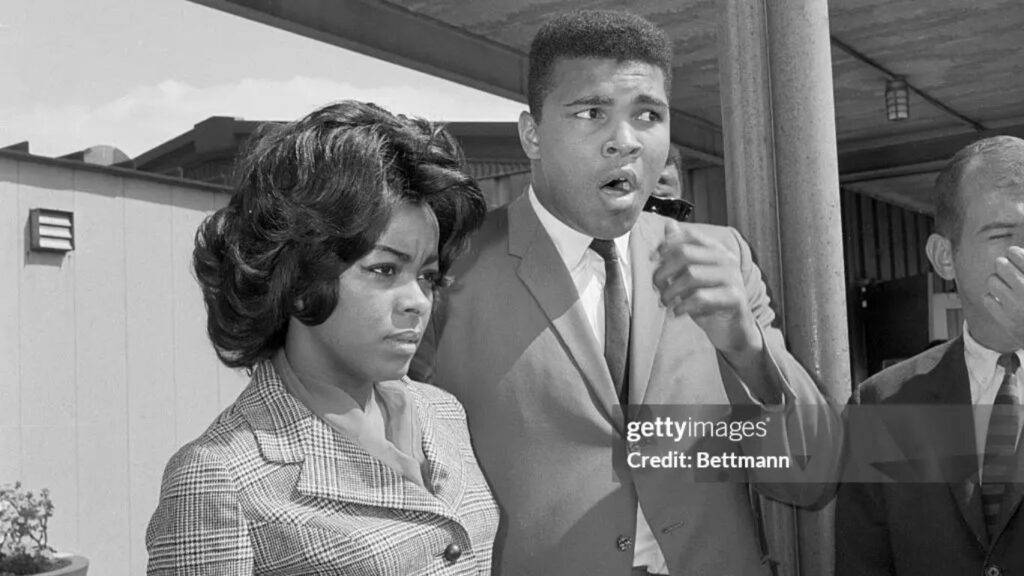
Behind every great historical figure stands a series of people who helped shape their journey — whether through love, conflict, or shared experiences. One such figure in the life of legendary boxer Muhammad Ali was Sonji Roi, his first wife. Although their marriage was short-lived, Sonji Roi’s role in Ali’s life marks an important moment in his transformation from Cassius Clay, the world boxing champion, into Muhammad Ali, the symbol of cultural change, faith, and courage.
This article delves deep into the life of Sonji Roi — her background, marriage, challenges, and life after fame — offering a complete look at the woman who briefly but memorably shared her life with one of the greatest sports icons in history.
Early Life and Background
Childhood and Upbringing
Sonji Roi was born on November 23, 1945, in the United States, during a time of social transformation and racial awakening. Details about her childhood and early family life remain sparse, as she was a private individual who kept much of her personal story away from public scrutiny. What is known, however, is that she grew up in a working-class environment, surrounded by the struggles and resilience typical of African-American communities in mid-20th-century America.
Her early years reflected a blend of ambition and independence — qualities that would later define her brief yet powerful presence in Muhammad Ali’s life.
Early Career and Aspirations
Before meeting Ali, Sonji Roi worked as a cocktail waitress in Chicago, Illinois. Some accounts describe her as a model or socialite, suggesting she had ambitions beyond the ordinary. Chicago, in the early 1960s, was a hub for jazz, activism, and Black culture. Sonji’s lifestyle was vibrant and modern; she moved in circles that mixed entertainment, nightlife, and social dynamism.
This backdrop placed her in the path of many rising stars, including Cassius Clay — a young, confident boxer who was beginning to transform into one of the most famous names in the world.
Meeting Cassius Clay (Muhammad Ali)
A Chance Encounter
Sonji Roi met Cassius Clay on July 3, 1964, just months after he had won the world heavyweight championship by defeating Sonny Liston. At that time, Cassius Clay was not only at the height of his career but also undergoing a personal transformation influenced by his growing connection with the Nation of Islam and Malcolm X.
Their meeting was sudden and romantic — Ali reportedly asked Sonji for her number the very day they met and proposed marriage soon after. According to Roi’s own recollections years later, she initially thought Ali’s proposal was playful or impulsive, but within 41 days, they were married.
Marriage and Public Fascination
On August 14, 1964, Sonji Roi and Cassius Clay were married in Gary, Indiana. The event was covered widely in newspapers, and the young couple quickly became the center of media attention. Ali was just 22 years old, and Sonji, 19. Their wedding symbolized glamour, charm, and hope — a union between a global sports hero and a striking young woman from Chicago.
But beneath the glamour lay an underlying tension that would soon test their relationship to the core.
Challenges Within the Marriage
Cultural and Religious Differences
When they married, Cassius Clay had just begun to embrace the Nation of Islam, the African-American religious movement that emphasized Black empowerment, separation from white society, and strict religious discipline. Shortly after their marriage, Cassius Clay officially changed his name to Muhammad Ali, marking his full commitment to Islam and to the teachings of Elijah Muhammad.
Sonji Roi, however, struggled with this new religious and cultural lifestyle. The Nation of Islam imposed specific expectations on women — from dress codes to behavioral norms — that Sonji found restrictive. She enjoyed stylish clothes, social life, and freedom of expression. To her, religion was personal, not a strict rulebook.
Ali’s devotion to his faith and Roi’s refusal to conform to the organization’s conservative expectations became a source of deep conflict between them.
The Weight of Fame and Expectation
Beyond religious tension, Sonji Roi also faced the overwhelming challenge of being married to a rapidly ascending global superstar. Everywhere Ali went, attention followed. Fans, journalists, and Nation of Islam members surrounded their home life, making privacy nearly impossible.
Roi reportedly felt isolated, unable to connect with Ali’s new social and religious circle. Her independent spirit clashed with the structured and often patriarchal expectations imposed by Ali’s entourage.
The Separation
The marriage began to unravel within a year. Although both appeared together in public for a short time, their relationship quietly ended in 1966. By then, Ali was fully immersed in his religious transformation and global fame. The official reason cited was “irreconcilable differences,” but Sonji Roi later revealed that their differences in faith and lifestyle were at the heart of their separation.
Life After Divorce
Moving Forward from the Spotlight
After her separation from Muhammad Ali, Sonji Roi largely retreated from public life. Unlike Ali’s later wives — Belinda Boyd, Veronica Porché, and Lonnie Ali — Roi did not remain in the public eye. She moved back to Chicago, where she continued to live a quiet, modest life.
Reports suggest that she briefly pursued modeling and community involvement, but none of these endeavors gained much media attention. Unlike Ali, who was constantly in the public’s gaze, Roi preferred privacy and normalcy.
Reflections on Her Marriage
In rare interviews given years later, Sonji Roi spoke with honesty and grace about her short-lived marriage. She admired Muhammad Ali’s greatness but also expressed sadness at how religion had interfered with their relationship.
“I didn’t have to be converted,” she once said. “He could have his religion and I could have mine.” These words reflected not resentment, but an enduring independence and dignity.
Later Life and Passing
Sonji Roi passed away on October 11, 2005, in Chicago at the age of 59. Her death received limited media coverage, overshadowed by the continuing fame of Muhammad Ali. Yet, for those who knew her story, her life remained an important reminder of the human experiences behind public legends.
The Role of Sonji Roi in Muhammad Ali’s Transformation
The First Chapter of a Larger Story
Sonji Roi’s presence in Muhammad Ali’s life represents his first encounter with love, marriage, and responsibility in the midst of his transformation from athlete to icon. Their marriage coincided with a period of intense change for Ali — from Cassius Clay the boxer to Muhammad Ali the Muslim, activist, and world figure.
Roi, as his partner during that critical year, witnessed his internal struggle between personal desires and ideological commitment. Her refusal to conform to religious expectations perhaps made Ali even more determined to prove his loyalty to his new faith.
Impact on Ali’s Personal Evolution
In many ways, their marriage tested Ali’s convictions. It forced him to choose between love and religious identity — a choice that defined much of his life afterward. While their relationship ended in divorce, it left a lasting emotional imprint.
Ali would later speak respectfully of Roi, acknowledging that she was part of his journey toward self-discovery. Even decades later, biographers often referred to her as the woman who “knew Cassius Clay before the world knew Muhammad Ali.”
Public Image and Misconceptions
Media Portrayal
During their short marriage, the media portrayed Sonji Roi in varying lights — sometimes as a glamorous young woman caught in the orbit of a superstar, other times as a defiant wife resisting religious conformity.
In truth, she was neither a symbol of rebellion nor merely a celebrity spouse. She was a young woman asserting her independence in a rapidly changing America — a period defined by civil-rights movements, gender expectations, and religious redefinition.
Cultural Reflection
Sonji Roi’s story reflects the broader experiences of many women during the 1960s: negotiating identity, faith, and individuality in a world dominated by men’s ambitions and society’s pressures. Her decision to walk away rather than surrender her freedom demonstrates strength rather than weakness.
Her narrative adds a vital, human dimension to the mythology surrounding Muhammad Ali — reminding us that even the greatest figures are shaped by personal relationships, emotional challenges, and moral decisions.
Legacy and Remembered Influence
A Quiet but Lasting Legacy
Although Sonji Roi never sought fame or recognition, her legacy continues indirectly through the historical documentation of Muhammad Ali’s life. Every biography, documentary, and retelling of Ali’s early years includes her story, if only as a brief chapter — yet that chapter marks the beginning of Ali’s emotional and spiritual evolution.
Her dignity in the face of conflict, her insistence on personal freedom, and her choice to maintain silence rather than bitterness contribute to her enduring respect.
How She Is Remembered Today
Today, Sonji Roi is remembered as the first woman to call Muhammad Ali her husband, a title she carried with quiet pride. Those who revisit her life recognize the grace and resilience she displayed amid public scrutiny and private struggle.
Her story continues to fascinate historians, cultural writers, and admirers of Ali’s life, who now view her not merely as a footnote, but as an essential part of understanding the man behind the legend.
The Broader Symbolism of Sonji Roi’s Story
Between Tradition and Freedom
At its core, the story of Sonji Roi and Muhammad Ali is not only about love and religion but also about the clash between tradition and individual freedom. Their relationship illustrates the challenges faced by couples when ideology and identity begin to diverge.
Roi’s courage to stay true to her beliefs at a time when women’s voices were often dismissed makes her story deeply relevant even today.
A Window into the 1960s America
Their union also offers a glimpse into the cultural and social transformation of 1960s America — a time when questions of race, gender, and spirituality were being renegotiated.
Through Roi’s eyes, we can see the cost of fame, the pressures of expectation, and the strength it takes to walk away from a life most would dream of.
Conclusion
Sonji Roi’s life may not have been as widely documented as Muhammad Ali’s, yet her influence resonates quietly through history. She represents a moment in Ali’s life when he was still defining himself, still human, still vulnerable to love and conflict.
Roi’s refusal to compromise her individuality made her a woman ahead of her time. She entered a whirlwind of fame, religion, and power — and when that world no longer reflected her truth, she chose peace over pretense.
Her story remains an essential reminder that the people who stand beside legends — even for a short time — often embody a strength and clarity that history tends to overlook.
Sonji Roi lived, loved, and left her mark with grace. She may not have remained in the spotlight, but her spirit remains immortal in the chapters of Muhammad Ali’s extraordinary journey.
Frequently Asked Questions (FAQs)
Who was Sonji Roi?
Sonji Roi was the first wife of Muhammad Ali (then known as Cassius Clay). She was born on November 23, 1945, in the United States and passed away on October 11, 2005.
How did Sonji Roi and Muhammad Ali meet?
They met in July 1964 in Chicago, where Roi was working as a cocktail waitress. Their connection was instant, and they married just 41 days later on August 14, 1964.
Why did Sonji Roi and Muhammad Ali divorce?
Their marriage ended primarily because of differences over religion and lifestyle. Roi struggled to accept the strict expectations of the Nation of Islam, while Ali’s growing devotion to his faith created distance between them.
What happened to Sonji Roi after the divorce?
After her separation, Sonji Roi returned to Chicago and lived a private life away from the public eye. She occasionally worked in modeling and community circles but chose not to pursue fame.
How is Sonji Roi remembered today?
She is remembered as Muhammad Ali’s first wife and as a woman who valued her independence and dignity. Her story reflects the challenges of balancing love, faith, and personal freedom during a time of great social change.